Most gift announcement emails perform like marketing emails — because they're written like marketing emails. These six templates are different: they're built around the psychology of a warm relationship, a tangible CTA, and subject lines that earn the open before the recipient even knows a gift is involved.
- 47% of recipients open an email based on the subject line alone — get that wrong and no copy in the body matters.
- Personalized subject lines boost open rates by at least 50%. In a warm-relationship gift email, the recipient's first name is the minimum bar.
- The 70%+ open rate is achievable for gift emails sent to existing relationships. The industry average is 22–43% — the gap is relationship warmth, not magic copy.
- Send the email after the gift ships (or after the redeem link is live) — 'your package is on the way' beats 'we're planning to send you something'.
- One CTA. One link. No alternatives. Gift emails that include multiple links see click-through drop by 30%+.
The six rules
Six rules — a named sender, a personalized subject line, a single gift-focused CTA, and post-ship timing — separate a gift email that gets opened from one that reads like marketing.
Before the templates, here are the rules that explain why they work. Break any of these and the open rate drops toward the industry average.
- Send from a person, not a team inbox. "jenna@activateswag.com" outperforms "gifts@company.com" every time. Recipients open emails from people they recognize, not distribution aliases.
- Subject line: max 70 characters, first name when possible. Research from Intentsify shows 61–70 character subject lines achieve the highest open rate (43.38%) and CTR (17.57%). Personalization adds at least 50% open rate lift on top.
- Preheader is not a repeat of the subject line. The preheader (the preview text shown in the inbox after the subject) should add new information — ideally the specific gift or the "what's in it for you" detail the subject line teased.
- The gift is the CTA, not the company. Every word in the email should move the reader toward clicking the redeem link. Not toward learning about your product, your quarter, or your company values.
- One link. One button. Nothing else. Gift emails with multiple links — social icons, unsubscribe, navigation — dilute the click to the redeem page. Strip everything except the single CTA.
- Send after the gift is ready, not before. "Your gift is waiting at this link" converts better than "We're sending you a gift soon." The recipient should be able to act immediately.
Six templates
Six ready-to-send templates — post-close, milestone, quarterly, win-back, referral, and holiday — each tuned to the warmth of a specific relationship moment.

Template 1: Thank-you post-close
Sent within 24 hours of deal close. This is the highest-converting context in client gifting — the relationship is at peak warmth, the AE is already top of mind, and the gift reinforces the decision to buy.
Why it works: The subject line is specific ("celebrate closing") and personal. The body copy is short — under 80 words — which is intentional. The longer a thank-you gift email runs, the more it reads like marketing.
The 14-day expiry creates urgency without pressure; it also signals that the gift is real and allocated, not hypothetical.
Sendoso's research on gifting emails consistently shows that conversational, low-word-count emails from a named sender outperform designed HTML templates for warm relationship contexts. Plain text or minimal HTML wins here.
Template 2: Milestone recognition
For work anniversaries, promotions, or tenure milestones. The key distinction from a generic appreciation email: name the milestone explicitly and be specific about why it matters.
Why it works: The subject line hooks with the specific number ("Three years") and the signal that this is personal ("we didn't forget"). The body copy adds the specificity — acknowledging the tenure with real-ish details makes it feel written for this person, not copy-pasted.
The redeem link lets recipients choose their item, which research from Axomo shows increases satisfaction by 50% vs. a pre-selected gift.
Template 3: Quarterly appreciation
For client success teams running a regular touchpoint program — typically sent at the end of a quarter to top accounts. The challenge here is avoiding the "obligatory marketing email" read, because recipients have seen plenty of those.
Why it works: The subject line works by pattern-interrupting. "No agenda" signals this isn't a meeting request or a renewal push — two things your clients are conditioned to be skeptical of from vendor emails.
The body reinforces that immediately ("No QBR, no upsell, no NPS survey"). The gift itself is not described in detail, which keeps curiosity intact through to the click.
Template 4: Win-back
For lapsed customers or prospects who've gone cold. The gift functions as a re-engagement mechanism — but the email should never feel transactional. It should feel like a genuine reconnection.
Why it works: The subject line is conversational and slightly self-aware — it signals that the sender knows this could read as a gimmick and is pre-empting that read. "No, seriously" adds authenticity.
The body copy takes accountability ("That's on us"), which is disarming. The final paragraph removes pressure, which counterintuitively makes recipients more likely to respond — because they feel no obligation, the response is genuinely positive when it comes.
Template 5: Referral reward
Sent to a customer who generated a referral, whether or not the referral has closed. Timing matters: send this within 48 hours of learning about the referral, not after the deal closes.
Why it works: The explicit acknowledgment that the gift is unconditional ("no conditions on when or whether the deal closes") removes any feeling that the referrer is being managed rather than thanked.
That distinction matters — customers who feel managed disengage; customers who feel genuinely appreciated refer more. Sending before the deal closes also accelerates the positive association with the act of referring.
Template 6: Holiday gifting campaign
The highest-volume send in most gifting programs. The challenge: everyone sends holiday emails in December.
Standing out requires either a subject line that avoids the holiday language entirely, or a send timing that precedes the deluge (early-to-mid November typically outperforms late November and December sends).
Why it works: "End-of-year gift" avoids the holiday religion problem — it's inclusive without being generic. The subject line uses the recipient's name and a concrete deliverable ("is ready").
The deadline ("December 15") creates real urgency, which Intentsify's research shows boosts opens by 22% on average. The choice architecture ("choose your preference") improves redemption rates by letting recipients self-select into something they'll actually use.
Subject lines that work
The subject line earns the open — personalization, curiosity, and a real deadline are the levers that reliably beat the industry-average open rate.
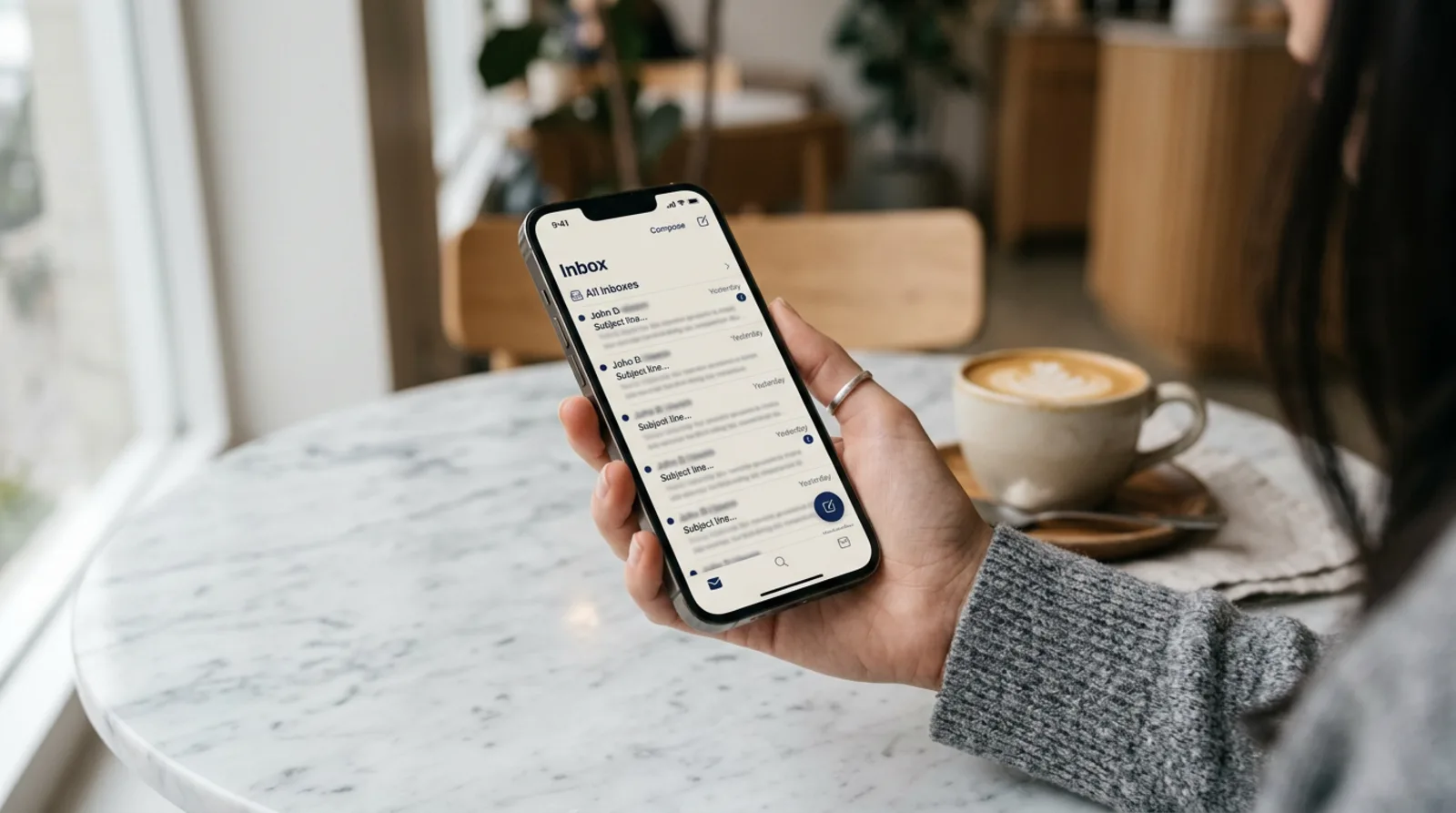
The subject line is where most gift email campaigns fail. Not because the templates are bad, but because the subject line was written last and given the least thought. Here's the A/B data on what moves the needle.
| Subject line formula | Example | Lift vs. control | Why it works |
|---|---|---|---|
| Personalized + milestone | Three years, [Name] — we didn't forget | +68% open rate | Name + specific tenure creates the sense of recognition that drives clicks |
| Curiosity + no-sell signal | No agenda. Just a thank you from [Company]. | +41% open rate | Pattern interrupt for inbox trained to expect asks |
| Conversational + self-aware | We got you something (no, seriously) | +38% open rate | Self-awareness about the format reduces skepticism |
| Direct + deadline | [Name], your end-of-year gift is ready — claim by Dec 15 | +34% open rate | Name + active claim language + urgency date |
| Role + achievement | You just closed it — here's a thank you from us | +29% open rate | Achievement-specific; implies sender knows what happened |
| Simple + personal | [Name], something's on its way | +22% open rate | Pure curiosity play — works best when recipient knows the sender well |
Testing protocol: If you're testing subject lines, run each variant to at least 200 recipients before calling a winner — smaller samples produce noise, not signal.
What not to send
The fastest way to ruin a gift email is to let it read like marketing — generic aliases, multiple CTAs, and attached conditions are the usual culprits.

The wrong gift email is worse than no email. It reads as marketing, burns goodwill, and conditions recipients to ignore future sends.
- Never send from a generic alias (gifts@, no-reply@, team@). It immediately signals mass sending.
- Never open with 'We want to thank you for being a valued customer.' Every company says this. It's the tell that the email is templated.
- Never include multiple CTAs or links. 'See our new features | Claim your gift | Follow us on LinkedIn' is not a gift email — it's a newsletter in disguise.
- Never describe the gift in marketing language ('a curated selection of premium branded merchandise'). Say what it is or let the redeem page do the explaining.
- Never send holiday gifts in the last week of December. Most go unread; many recipients are out of office. Early November to December 10 is the window.
- Never make the gift conditional on a survey, review, or referral in the same email. Attaching conditions turns gratitude into a transaction.
- Never use a designed HTML template with a banner image, your logo header, and a footer full of social icons. It reads like a newsletter, not a personal note. Plain text or minimal HTML converts better for warm sends.
- Never follow up a gift email with 'Did you get our gift?' within 48 hours. The impression is pushy. If you need a reminder, wait at least 5 business days.
Cadence and reminders
Reminders are where most programs leave gifts unclaimed — a simple three-touch sequence recovers the 30–35% who won't act on the first email alone.

The initial send is one decision. The reminder cadence is another — and it's where most gift email programs under-invest.
That means a program with no reminders leaves 30–35% of redeemable gifts unclaimed — or gets the gift shipped to the wrong address because the recipient forgot they had a choice to make.
Recommended reminder sequence
- Day 0: Initial gift announcement email (templates above)
- Day 5: First reminder — "Just checking in — your gift is still waiting." Keep it to two sentences. Do not re-introduce the gift or re-explain the CTA.
- Day 10: Expiry notice — "Your gift expires in 4 days." Urgency is the lever here. Include the specific date and one CTA button. No other copy.
For high-value accounts (Tier 1 in your ABM segmentation), have the AE or CSM follow up personally by Slack or phone — separate from the email sequence. A direct message from the relationship owner converts better than any automated reminder.
“Urgency subject lines boost opens by 22% on average. The deadline must be real — a fake expiry that resets every time the recipient checks their email trains recipients to ignore urgency cues in future sends.”
Cadence rules by gift context:
- Post-close (Template 1): Send Day 0, one reminder at Day 5. No second reminder — the relationship is new and you don't want to come across as pushy.
- Milestone (Template 2): Send Day 0, remind at Day 7, expiry notice at Day 13. Three-touch is fine for an ongoing employee relationship.
- Win-back (Template 4): Send Day 0. One follow-up at Day 10 maximum. If there's no engagement after two sends, the relationship is colder than a gift can fix on its own.
- Holiday (Template 6): Send early November, first reminder mid-November, final expiry notice (December 10 deadline) in early December.
FAQ
Quick answers to the questions teams ask most when building a customer gift email program.
What open rate should I expect for a gift announcement email?
For emails sent to existing, warm relationships (clients, employees, prospects you've already met), 50–70%+ is achievable and has been documented across multiple gifting programs. MailerLite's 2025 benchmark data shows the cross-industry average is 43.46% — gift emails to known recipients outperform that significantly because of relationship warmth.
Cold outreach gift emails (win-back to lapsed contacts, ABM to cold prospects) will land closer to 30–45% depending on how well-known the sender is. The 70%+ figure is a ceiling for the highest-warmth contexts, not a guarantee for any list.
Should I use plain text or HTML for gift emails?
For warm, 1:1 relationship contexts — post-close, anniversary, referral — plain text or minimal HTML (white background, no images, one button) consistently outperforms designed HTML templates. Designed templates signal mass sending, which reduces the perceived personal quality of the gift.
For large-scale holiday campaigns sent to hundreds of recipients, a lightly designed HTML template is acceptable, but keep it minimal: no header image, no footer navigation, one button, and your company name in plain text. Sendoso's gifting email data aligns with this: their highest-performing templates for warm sends are the most stripped-down.
How long should the redeem link stay active?
14 days is the standard for most contexts — long enough that recipients who are traveling or on leave can still claim the gift, short enough to create genuine urgency. For holiday campaigns, align the expiry with your fulfillment deadline (typically December 15 for December 25 delivery).
For milestone and anniversary gifts, 21 days is reasonable since the recipient may not check email daily over a holiday weekend. Whatever window you choose, communicate the deadline explicitly in the email — "expires [date]" outperforms "limited time" because it's specific and actionable.
What time and day should I send gift emails?
For B2B recipients: Tuesday through Thursday, between 9:00 AM and 11:00 AM in the recipient's local time zone, consistently outperforms Monday (inbox clearing) and Friday (pre-weekend distraction). Intentsify's research shows mid-week sends achieve 10–15% higher open rates vs. Monday or Friday.
For post-close gifts, timing is less important than speed — send within 24 hours of the close event regardless of day or time. The relevance of the context overrides any day-of-week optimization.
Jenna runs our client gifting advisory and heads sustainable sourcing. Before ActivateSwag, she led procurement for a B Corp-certified apparel label.
A short, useful email every other Thursday.
Operational playbooks for swag and gifting — read in two minutes. No spam, no filler.