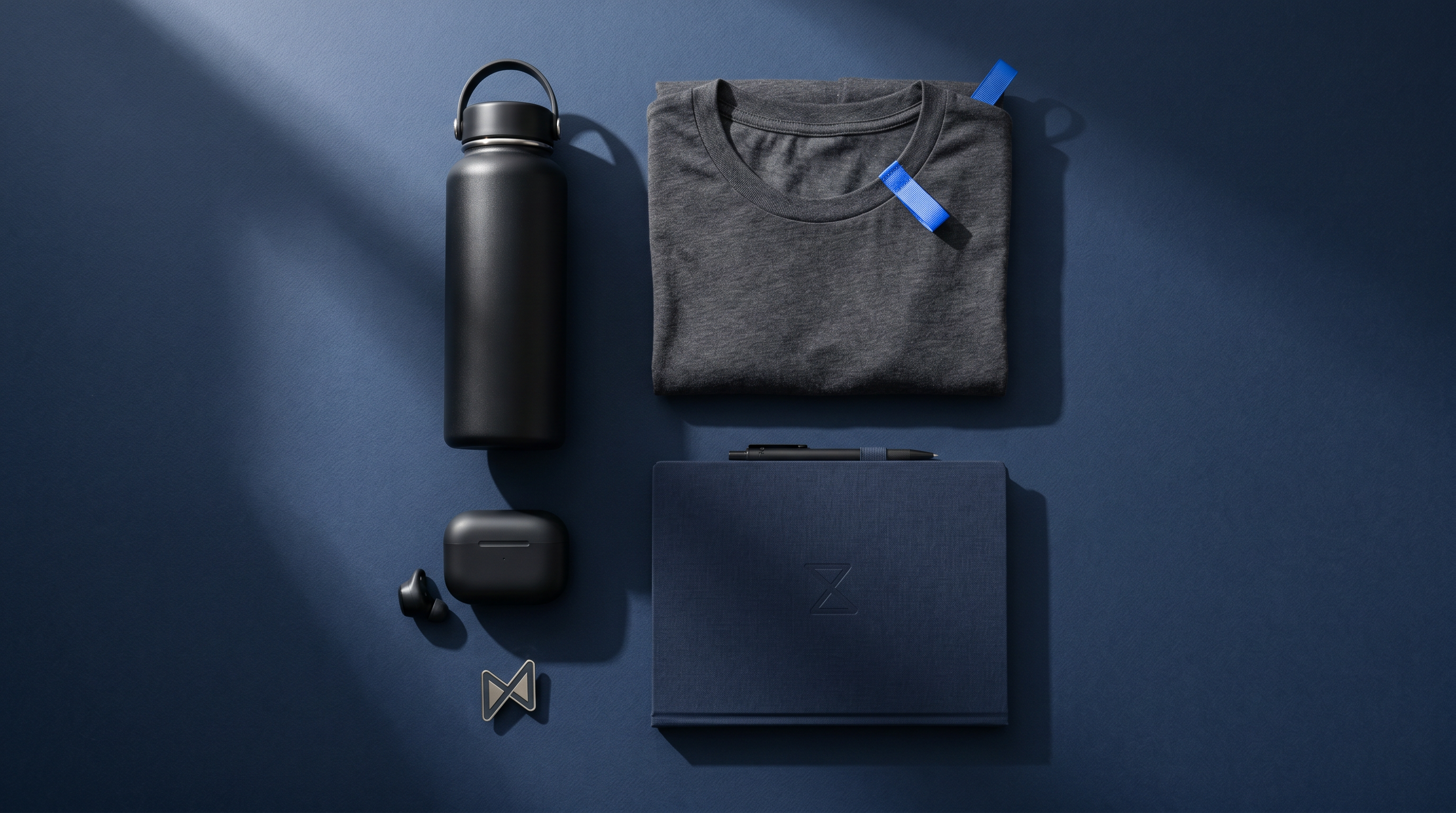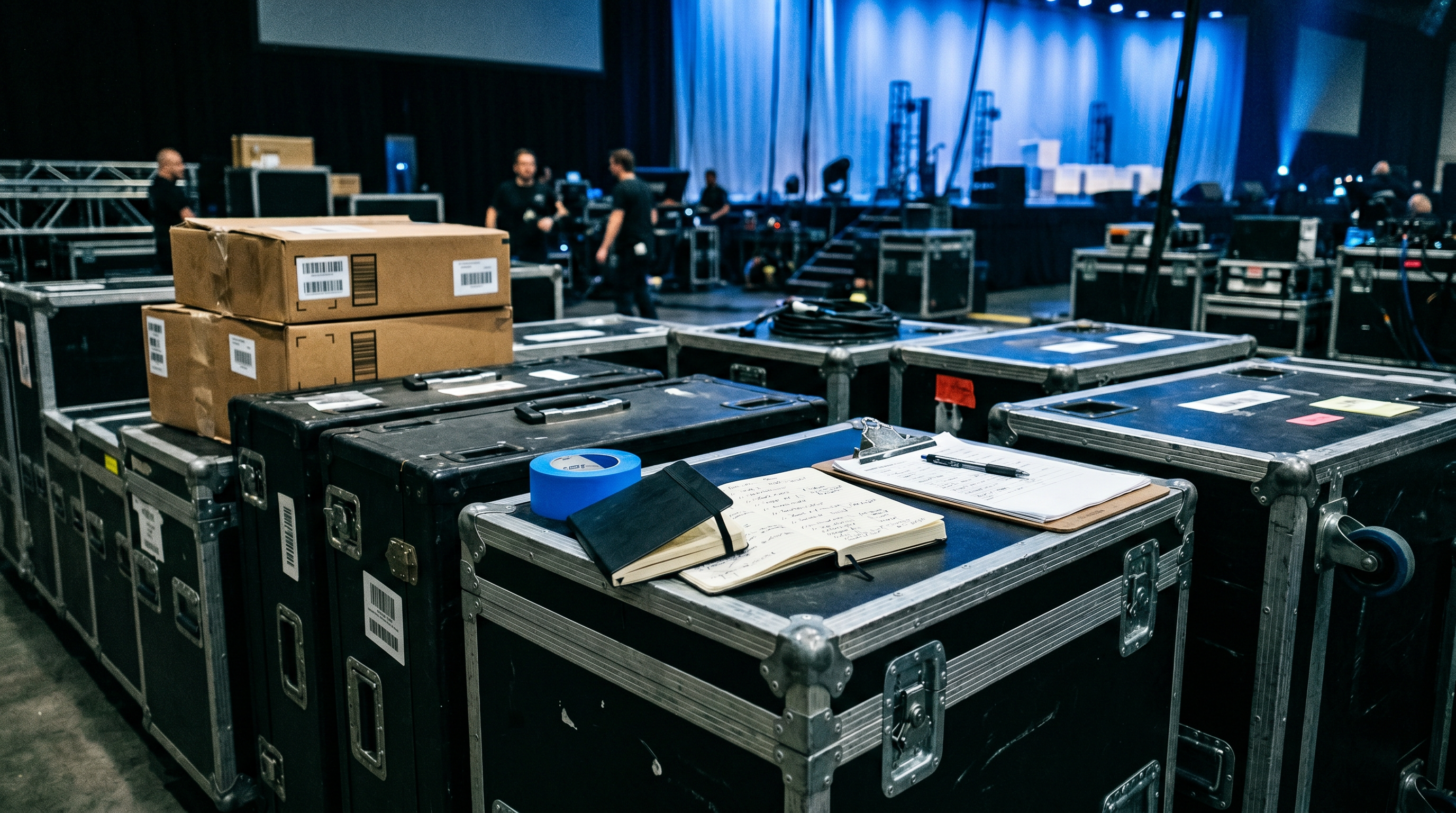
Most event swag spend is decided by gut feel, last year's budget line, and whatever the vendor had in stock. This is the operator's playbook for doing it differently — tier the event, match the bucket, calculate the CPL, and stop shipping things nobody will keep.
- Tier events by pipeline potential before allocating any swag budget — Tier 1 events warrant 5–10x the per-attendee spend of Tier 3.
- The four swag buckets — Welcome, Booth, VIP Dinner, and Post-event — each have different quality bars and different ROI metrics.
- 83% of attendees remember the brand that gave them a useful promo item at an event. Useful is the operative word.
- Lead times for decorated apparel run 3–4 weeks minimum; plan for 6 weeks to a flagship show.
- Post-event follow-up with a personalized redeem link converts at 2–3x the rate of a generic email drip.
Tier the event first
Not all events deserve the same per-head spend — tier by pipeline potential and audience seniority before allocating a dollar.
The single most common field marketing budget mistake is treating all events the same. A 50-person regional dinner and a 30,000-attendee industry conference are not the same spend decision — but they often get the same $8 per-head allocation because nobody built a tiering system.
Here is the framework. Tier events by two factors: estimated pipeline contribution (how many qualified opportunities does this event typically generate?) and audience seniority (what percentage of attendees are decision-makers vs. practitioners?).
The CEIR data is useful here: 81% of trade show attendees have buying authority, but that average masks enormous variation. A developer conference skews practitioner; a CFO summit skews buyer. Know your mix before you set your budget.
| Tier | Event type | Typical pipeline % | Audience mix | Swag spend/attendee | Strategy |
|---|---|---|---|---|---|
| Tier 1 | Flagship industry shows, own-hosted summits | 40–60% of annual event pipeline | 60–80% decision-makers | $25–75 | Premium quality, personalized where possible, all four buckets active |
| Tier 2 | Regional / vertical shows, partner events | 20–40% of annual event pipeline | 40–60% decision-makers | $10–25 | Core booth + VIP bucket only; skip Welcome bag for general attendees |
| Tier 3 | Local meetups, hosted dinners, sponsorship activations | 5–20% of annual event pipeline | Mixed; relationship-heavy | $5–15 | VIP Dinner bucket only; keep it personal and high-quality within the budget |
Run this exercise for every event in your calendar before the quarter starts. If a Tier 3 event gets Tier 1 spend, you have a budget problem. If a Tier 1 event gets Tier 3 spend, you have a pipeline problem.
The four swag buckets
Split budget across Welcome, Booth, VIP Dinner, and Post-event — each has its own audience, quality bar, and ROI metric.
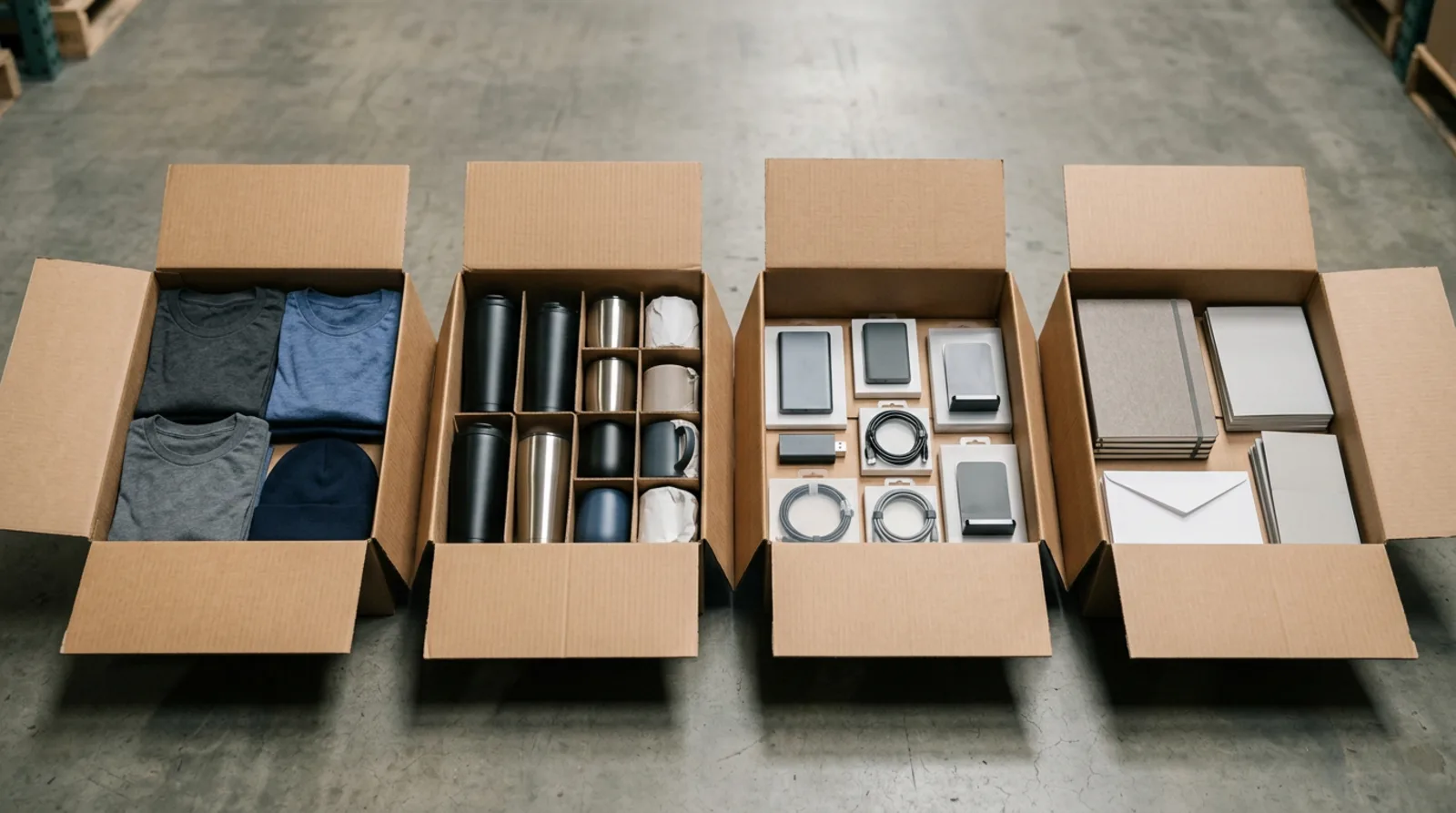
Once you have tiered the event, allocate budget across up to four buckets. Not every tier uses all four. Here is what each bucket is for, what belongs in it, and what the quality bar should be.
Bucket 1 — Welcome
This is the bag or tote that goes to all registered attendees at check-in or in a conference bag insert. The audience is broad, the per-unit cost is low ($3–8), and the primary goal is brand visibility at the event, not relationship building.
What works: a sturdy tote or zipper bag (people need it to carry other conference materials), a sticker pack, a single branded item like a small notebook. What does not: cheap pens that stop working by day two, branded hand sanitizer, anything that feels like it was bought in bulk from a catalog with your logo slapped on.
Bucket 2 — Booth
Booth swag is the item you hand to people who stop at your booth. The goal shifts from broad visibility to dwell time and lead capture.
The booth item should require a scan or a conversation to receive. “Badge scan to get the [item]” is not manipulative — it is a reasonable exchange, and 45% of attendees share event swag on social media, giving you secondary reach.
Budget: $8–20 per item. The most effective booth items in 2025–2026 are premium drinkware (insulated tumblers, glass water bottles), portable chargers, and high-quality packable bags.
Bucket 3 — VIP Dinner
This bucket is for your 10–30 most important relationship opportunities at the event — prospects at named accounts, existing customers at risk of churn, analyst or press relationships. The per-unit spend floor here is $50–100, and the item should feel like a considered gift, not event swag.
No logos on the exterior. A leather card holder, a hardcover book relevant to their industry, a premium candle, a specialized food or drink item from the event city — all of these outperform a nicer version of your booth tote.
The VIP item is handed personally, ideally at the dinner itself, with a brief note that references something specific about the person or their company. That level of personalization is what separates this bucket from the others.
Bucket 4 — Post-event
Most field marketers stop after the event. The post-event bucket is where pipeline actually closes. A targeted follow-up gift — sent to the 20–50 highest-value leads within 48 hours of the event — using a personalized redeem link converts at 2–3x the rate of a generic email sequence because it continues the conversation in a tangible, differentiated way.
The post-event item does not need to be expensive. A $25–40 item with a handwritten-style note referencing a conversation at the event is the right brief. The goal is relevance and timing, not dollar value.
What to ship, what to skip
Ship durable, daily-use items people take home; skip the cheap catalog filler that ends up in a drawer.
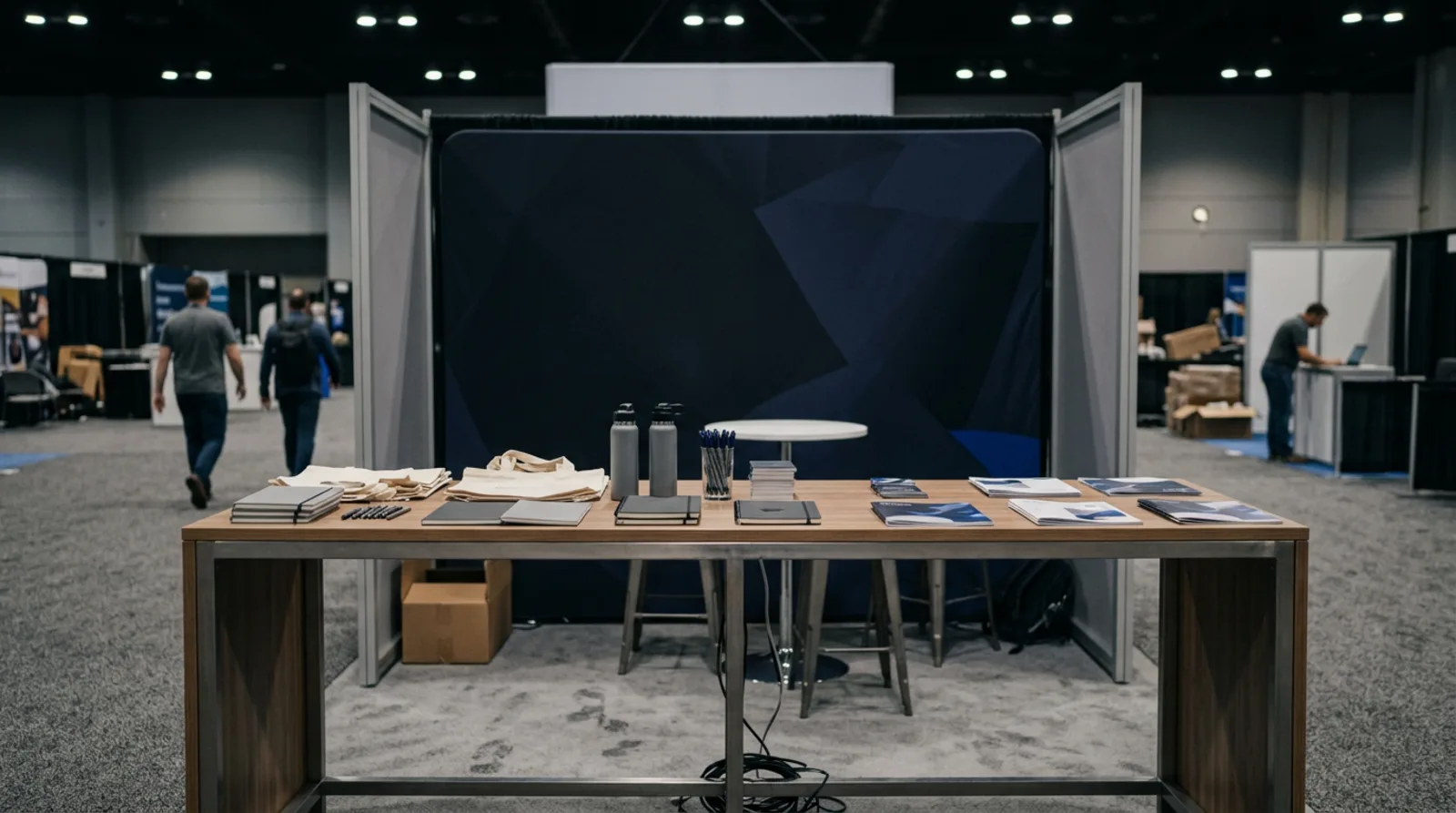
Here is the product-level guidance, derived from 400+ events and post-event attribution analysis.
Ship these
- Insulated tumblers and bottles. Used daily, visible in meetings and on video calls, durable enough to last years. CPI under 0.4 cents across the product lifetime.
- Premium packable bags and totes. Carried the entire event, taken home, used again. The conference tote that holds up becomes the permanent work bag.
- Mid-weight fleeces and quarter-zips. Convention centers are cold. A good fleece gets worn all day and remembered. Skip the heavyweight hoodie — it does not fit in a carry-on.
- Portable chargers (5,000 mAh+). Universally useful, universally kept. Pair with a QR code that links to a redeem page for a second item — your conversion rate on that link will be high because the person already has positive associations with your brand.
- Branded notebooks (hardcover, lay-flat). Used at the event, taken home. Put your URL on the back cover, not the front.
Skip these
- Cheap pens. The industry's most over-ordered item. They are not kept, not remembered, and they generate 40% of corporate gifts end up in a drawer or trash.
- T-shirts with large front logos. People will not wear a walking billboard unless the design is genuinely good. If you cannot invest in a real designer for the t-shirt, skip it.
- Branded stress balls and novelty items. Zero retention, zero impressions after the show floor. Budget better spent on a smaller quantity of something useful.
- Perishables without a compliance check. Chocolate and food items are crowd-pleasers, but many large enterprises have gift policies around consumables, particularly for regulated industries. Check before you ship.
- Anything you would not use yourself. This is the simplest quality test. If you would leave it in the hotel room, your prospect will too.
“We cut our booth swag SKUs from nine to three, doubled the per-unit quality, and our booth traffic went up 30%. People can tell the difference between something you cared about and something you bulk-ordered.”
Budget by event type
Use per-bucket allocations by tier as starting points, then judge efficiency on cost per meeting — not total spend.
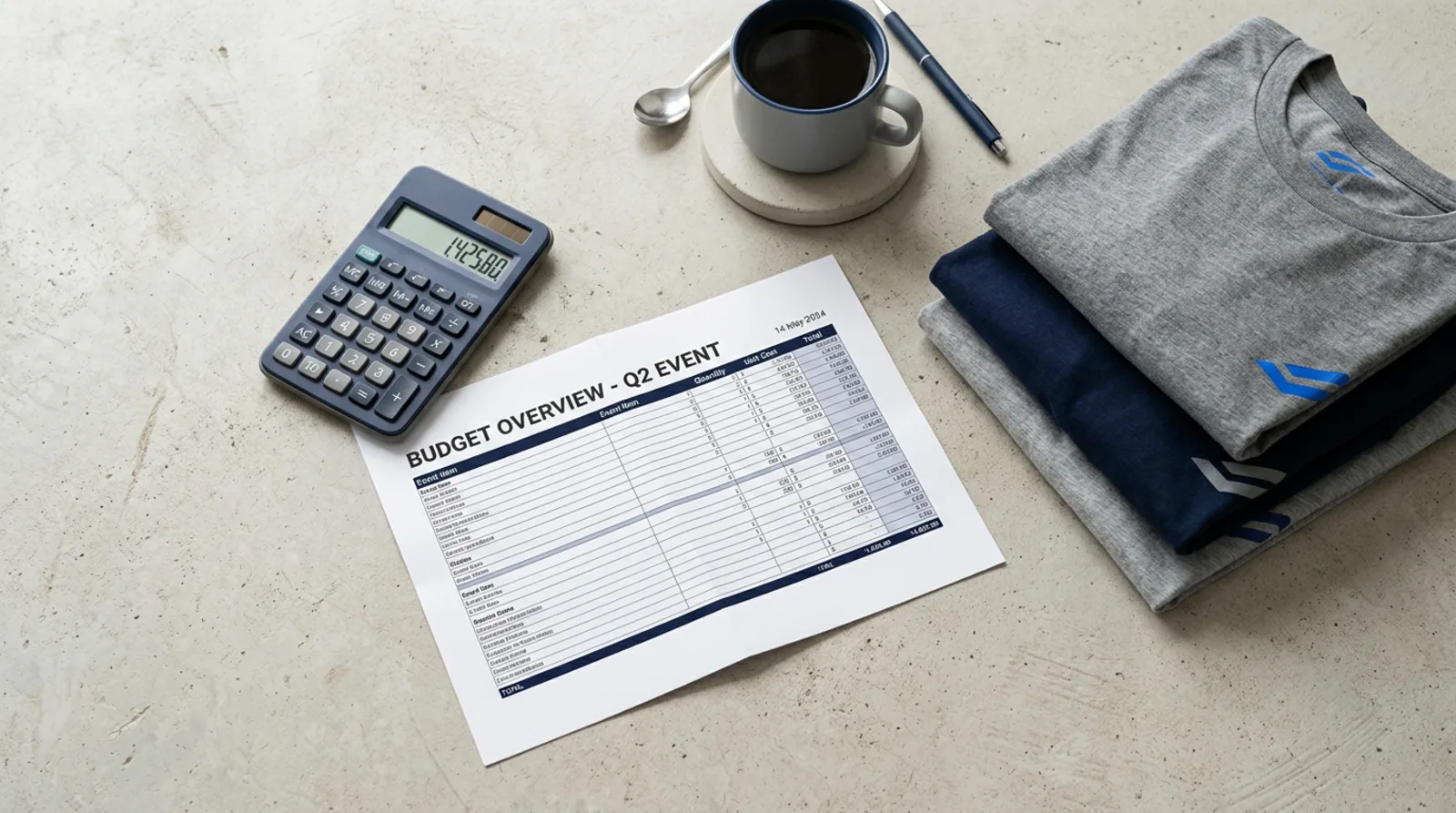
The matrix below gives you the per-bucket allocation for each event tier. These are starting points — adjust based on your specific event and audience mix.
| Welcome bucket | Booth bucket | VIP Dinner bucket | Post-event bucket | Total per event (est.) | |
|---|---|---|---|---|---|
| Tier 1 flagship (500 attendees, 30 VIPs, 75 post-event) | $4–8/person ($2,000–4,000) | $15–20/lead ($3,000–5,000 for 200 leads) | $60–100/person ($1,800–3,000) | $30–45/person ($2,250–3,375) | $9,050–15,375 |
| Tier 2 regional (200 attendees, 15 VIPs, 30 post-event) | Skip or $5/person ($1,000) | $12–18/lead ($1,200–1,800 for 100 leads) | $50–75/person ($750–1,125) | $25–35/person ($750–1,050) | $3,700–4,975 |
| Tier 3 dinner/meetup (50 attendees, 20 VIPs) | Skip | Skip | $40–60/person ($800–1,200) | $20–30/person ($400–600 for 20 follow-ups) | $1,200–1,800 |
Calculate your cost per meeting (CPM) by dividing the total event budget (including swag, booth space, travel, and staff time) by the number of qualified meetings you book. A CPM under $500 is excellent for enterprise field marketing.
Swag typically represents 8–15% of total event spend — it is rarely the line item to cut when budgets are tight, because it drives the booth traffic and post-event response rates that make everything else work.
Lead times and last-mile
Decorated apparel needs weeks of runway — plan production 4–6 weeks out and know your venue's receiving rules before you ship.

Lead times are where most field marketing programs fail. The item you want for the event is not the item you will get if you order four weeks out.
| Item category | Production lead time | Buffer recommended | Notes |
|---|---|---|---|
| Decorated apparel (embroidery) | 14–21 business days | 6 weeks before ship date | Color matching and size range add 3–5 days to approval cycle |
| Decorated apparel (screen print) | 10–15 business days | 5 weeks before ship date | Rush fees apply after 10 business days |
| Hard goods (drinkware, tech) | 7–14 business days | 4 weeks before ship date | Laser engraving faster than pad print |
| Hard goods (bags, notebooks) | 10–18 business days | 5 weeks before ship date | Custom colors extend timeline |
| On-demand (redeem links) | No production lead time | 48 hours to set up | No inventory risk; fulfills when redeemed |
International events
Customs is the hidden cost of international event swag. Most teams discover this the hard way when a box of hoodies sits in German customs for 10 days while the show runs without them. The rules:
- Declare items as “promotional samples, no commercial value, return after event” where applicable. This reduces duty exposure but requires accurate documentation.
- Use a Carnet (ATA Carnet) for high-value goods you intend to return. This avoids import duties entirely for participating countries.
- For consumables and items you will distribute (not return), pay the duties. Budget 15–25% of declared value for EU imports; higher for some APAC markets.
- The cleanest solution for international events: source from a regional warehouse that already has the goods in-country. No customs, no drayage, no freight drama.
After the event
The 72 hours after the last session are your competitors' quiet window — a personalized 48-hour send is where pipeline actually closes.

The post-event window — the 72 hours after the last session — is when your competitors go quiet. Most field marketers are catching up on email and filling out expense reports. This is your opportunity.
The 48-hour send
Within 48 hours of the event ending, send personalized redeem links to your highest-value contacts — the conversations you tagged during the show as “follow up personally.” The message should reference a specific conversation, name the item, and make it easy to click.
Subject lines that work: “[Name], I grabbed something for you at [Event Name]” and “Your [item] is ready — I set it aside based on our chat.”
Leftover inventory
Every event leaves inventory. Build a plan for it before the show, not after. Options: ship surplus to a centralized warehouse for the next event, convert it to an employee-facing campaign (“shop the event surplus” internal store), or donate decorated items to a relevant nonprofit.
Do not let $3,000 of branded product sit in a conference room closet for 18 months.
Attribution and reporting
The CFO question is always “what did we get for the event spend?” Have the answer ready. Track: qualified meetings booked at or sourced from the event, pipeline influenced (deals where an event contact is on the account), and cost per meeting (total event spend / qualified meetings).
Swag line items belong in the event cost total, not in a separate budget silo — this is the only way to get an honest CPM number.
- Event tiered and budget allocated by tier (Welcome / Booth / VIP / Post-event)
- Production ordered with 4–6 week lead time (apparel: 6 weeks minimum)
- Shipping method confirmed: hotel vs. convention center receiving rules checked
- International customs strategy documented if applicable
- VIP list finalized (10–30 names) with personalized notes drafted
- Booth item requires badge scan or conversation before handoff
- Post-event redeem link sequence built and tested before the show
- Leftover inventory plan in place (warehouse / internal store / donate)
- Attribution tracking set up in CRM (event source tag on all contacts)
FAQ
Quick answers to the questions field marketers ask most about event swag budgets, shipping, and ROI.
What is the best swag for a trade show booth?
The best booth items are useful, durable, and slightly premium — enough that people feel it was worth stopping for. Insulated tumblers and bottles are the current top performer across most B2B events. Packable bags work especially well at multi-day conferences where attendees accumulate materials.
Avoid anything that requires explanation (“what is this?”) or anything that is only usable in one context (conference-only items get left in hotel rooms).
How much should I budget for conference swag?
Use the tier matrix above as a starting point. For a mid-size Tier 2 regional event (200 attendees), a realistic all-in swag budget is $3,700–5,000 across all four buckets. For a flagship Tier 1 show, expect $9,000–15,000 in swag spend as part of a much larger total event budget. Calculate cost per meeting, not just total spend, to evaluate efficiency.
How do you ship swag to an event without paying freight?
There is no way to fully avoid freight costs for physical goods shipped to a venue — but you can minimize them. Shipping to the host hotel rather than the convention center avoids drayage fees.
For international events, sourcing from regional inventory eliminates cross-border freight and customs entirely. For smaller quantities (under 50 units), carry-on shipping is often faster and cheaper than ground freight.
Should I use redeem links at trade shows instead of physical giveaways?
Both have a place. Physical items at the booth drive foot traffic and immediate brand impression — you cannot replicate the in-person handoff with a QR code. Redeem links work best in the post-event bucket, where you can personalize the send and collect a confirmed address without a spreadsheet.
Some teams use a hybrid: a small physical item at the booth plus a QR code that routes to a redeem page for a premium follow-up item, gated behind a badge scan.
How do you measure ROI of event swag?
Track three numbers: (1) Redemption rate on any post-event redeem link — target 50%+ for well-targeted lists. (2) Reply rate on post-event follow-up sequences — if you are not getting 15%+ replies from personalized outreach, the targeting or the message is off. (3) Cost per meeting (total event cost including swag / qualified meetings booked at or sourced from the event).
ActivateSwag's event dashboard surfaces redemption and delivery data; join it to your CRM pipeline data for the full picture.
Priya has led field marketing at three SaaS companies and has shipped swag to more than 400 events across 14 countries. She writes the Field Notes column.
A short, useful email every other Thursday.
Operational playbooks for swag and gifting — read in two minutes. No spam, no filler.