
"Eco-friendly" is printed on a lot of things that end up in landfill. This guide cuts through the buzzwords — covering the real certifications, the materials that actually hold up, and the ten questions you should ask every supplier before you place an order.
- Seven certifications matter: GOTS, OEKO-TEX Standard 100, B Corp, Fair Trade, FSC, GRS, and bluesign — each covers a different slice of the supply chain.
- Recycled polyester still sheds microplastics. Bio-based plastic is not the same as compostable. Know the difference before you spec a product.
- Sustainable swag runs 15–30% more expensive at typical MOQs — but smaller, on-demand runs can close that gap.
- "Recyclable" on a label does not mean the item will actually be recycled. End-of-life planning is the final, most-ignored step.
- 72% of consumers prefer eco-friendly promo items, but 52% also say they've encountered false sustainability claims from brands.
Why now
Consumer demand, EU green-claims regulation, and employee expectations have turned sustainable swag from a nice-to-have into a procurement requirement.
Three things converged in the last two years to make sustainability a procurement requirement, not a nice-to-have. First, demand data: 72% of consumers now prefer eco-friendly promo products — that number was in the low 40s five years ago.
Second, regulatory pressure: the EU's new ecodesign and green claims rules (effective 2026–2027) impose legal liability on brands that make vague sustainability assertions without evidence.
Third, internal pressure: more than 80% of employees say they want their companies to take environmental action, and Gen Z/millennial employees — now the majority of the workforce — put sustainability near the top of employer evaluation criteria.
The problem is that the promo products industry responded to this demand with a lot of green theater. Water bottles labeled "eco" because they're reusable. T-shirts called "organic" without a single certification. Tote bags stamped with recycled content percentages that refer to the swing tag, not the fabric.
This guide is for buyers who want to get it right. Not performatively right — actually right.
The certifications that matter
Seven third-party certifications each verify a different slice of the supply chain — stacking them replaces "trust us" with "verify here."

Certifications are third-party audits. They replace "trust us" with "verify here." Seven certifications are worth caring about for corporate swag sourcing. Each covers a different part of the supply chain, so stacking them gives you a more complete picture.
| Certification | What it covers | What it actually requires | Best for |
|---|---|---|---|
| GOTS (Global Organic Textile Standard) | Organic fiber textiles end-to-end | ≥70% certified organic fiber, banned hazardous inputs, documented social compliance at every processing stage | Apparel, tote bags, towels |
| OEKO-TEX Standard 100 | Chemical safety in finished textiles | Every component tested for 100+ harmful substances; does NOT cover farming or social conditions | Any textile where you can't verify upstream fiber |
| bluesign | Chemical and water use in textile manufacturing | Resource efficiency benchmarks, banned substance list, factory-level audits for water and energy consumption | Performance fabrics, dye-heavy items |
| GRS (Global Recycled Standard) | Recycled content claims | Chain-of-custody verification that recycled content % is accurate; covers both pre- and post-consumer waste | rPET bags, recycled polyester fleece, bottles |
| Fair Trade Certified | Labor conditions and community impact | Minimum wages, safe conditions, no forced/child labor, community development premium fund | Apparel made in high-risk labor markets |
| FSC (Forest Stewardship Council) | Paper, wood, and cardboard products | Responsibly managed forests, chain-of-custody tracking from forest to finished product | Packaging, notebooks, wood accessories |
| B Corp | Entire company performance | Verified score of 80+ across governance, workers, community, environment, customers — full company audit | Choosing a supplier/vendor, not a product |
A few clarifications the certifications table won't tell you:
- GOTS does not certify the finished garment decoration. If you embroider or screen-print a GOTS-certified blank with conventional inks, the finished product is no longer GOTS-compliant end-to-end. Ask your decorator if they use water-based or GOTS-approved inks.
- OEKO-TEX Standard 100 is not an organic certification. It certifies the garment is free of harmful substances. A 100% conventional cotton shirt can carry OEKO-TEX 100. It tells you what's not in the fabric, not what the farming looked like.
- B Corp certifies the company, not the product. A B Corp supplier is a meaningful signal of organizational values. It is not a substitute for product-level certifications.
- 1% for the Planet is a brand commitment, not a product audit. Companies pledge to donate 1% of annual revenue to environmental nonprofits. Worth supporting, but it tells you nothing about how the product was made.
“Marketers must have a reasonable basis for environmental claims before making them. Unqualified claims — like "eco-friendly" — are likely to be interpreted as broad environmental benefit and are nearly impossible to substantiate.”
Materials: what holds up
The real material choices are more nuanced than "natural good, synthetic bad" — each option trades off footprint, durability, and end-of-life.

The material debate in sustainable swag is more nuanced than "natural = good, synthetic = bad." Here's the honest breakdown of the most common options.
Organic cotton vs. regenerative cotton
Certified organic cotton (GOTS or OCS-verified) eliminates synthetic pesticides and fertilizers, which account for a significant share of conventional cotton's environmental footprint. But organic certification doesn't require soil health practices.
Regenerative agriculture goes further — it specifies active soil building through cover crops, reduced tillage, and composting. Regenerative cotton is rarer, harder to certify consistently, and commands a significant premium.
For most swag programs, GOTS-certified organic cotton is the credible, verifiable choice. Look for the certification number, not just the word "organic" on a product sheet.
Recycled polyester (rPET) — the microplastic problem
Recycled polyester made from post-consumer plastic bottles (rPET) is one of the most common "sustainable" materials in promo products. The supply chain story is credible: it diverts plastic from landfill and uses roughly 50% less energy to produce than virgin polyester.
The problem is shedding. Synthetic textiles release microplastic fibers every time they're washed — studies estimate a single fleece jacket sheds up to 250,000 microplastic fibers per wash cycle, many too small for standard wastewater treatment to capture.
This doesn't make rPET wrong for every application. Bags that rarely get washed, drinkware insulation, and accessories are lower-risk than performance fleece or athletic wear. For washable apparel, blended rPET/organic cotton fabrics reduce shedding.
Guppy Friend wash bags can capture fibers at the consumer level, though requiring recipients to use them is not realistic. Specify: ask suppliers for GRS certification to validate the recycled content claim, and use rPET strategically, not as a universal answer.
Bio-based plastics — not the same as compostable
This is where the most misleading claims live. "Bio-based" means the plastic is derived from plant sources (corn starch, sugarcane) rather than petroleum. "Compostable" means it will break down under specific composting conditions.
A product can be bio-based and not compostable. A product can be compostable and require industrial composting conditions (58°C+ for 12+ weeks) that home compost bins cannot achieve.
PLA (polylactic acid) is the most common bio-based plastic in drinkware and packaging. It is industrially compostable under the right conditions — but if it ends up in a recycling bin, it contaminates the PET stream. If it goes in the trash, it behaves like conventional plastic in landfill.
Unless your recipients have access to industrial composting facilities (rare), PLA is a marginal improvement at best. Look for items certified to ASTM D6400 (industrial compostable) or EN 13432 (European equivalent), and be honest with recipients about disposal.
Aluminum vs. stainless steel vs. Tritan drinkware
Drinkware is one of the highest-use categories in swag programs, so the material choice matters for longevity and actual use.
- Aluminum bottles are lighter and require less energy to produce than stainless, and aluminum recycling is highly efficient (80%+ recycled content is achievable). Downside: most require a liner (often epoxy or stainless), which complicates recyclability. Single-wall aluminum without a liner is the cleanest option but won't keep beverages cold.
- Stainless steel (typically 18/8 food-grade) is durable, widely recyclable, and does not leach chemicals. It's heavier than aluminum but the dominant choice for kept drinkware. Higher upfront energy cost to produce than aluminum, but the longevity advantage is significant — a stainless bottle used for 5 years generates a fraction of the lifecycle emissions of disposable alternatives.
- Tritan is a BPA-free copolyester — it's a plastic, not a natural material, despite frequent mislabeling. It's durable and dishwasher-safe, but it is not recyclable in standard municipal streams and has no end-of-life advantage. Avoid using Tritan as a "sustainable" option.
Red flags to reject
Six unverifiable claims — from "eco-friendly" with no cert number to unsubstantiated "carbon neutral" — should end a supplier conversation immediately.
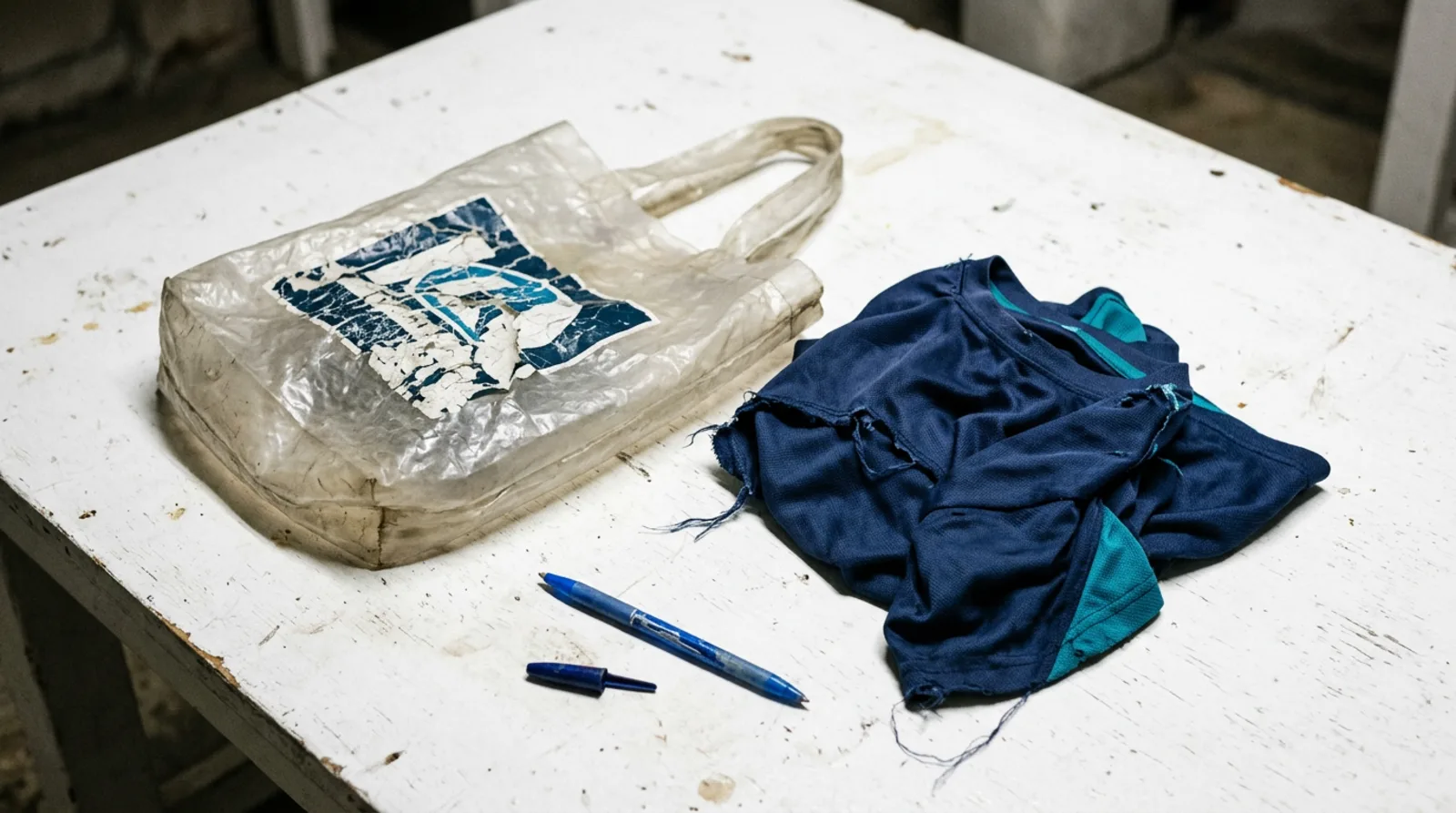
Before the supplier questions, here's what should end the conversation immediately.
Ten supplier questions
Send these ten questions by email so you get written answers you can hold suppliers to.
These questions separate suppliers who have done the work from those who have hired a good copywriter. Send them via email so you get written answers you can hold them to.
- Which third-party certifications apply to this specific product, and can you provide the certificate number and expiry date?
- What percentage of the product (not the packaging) is made from certified organic or recycled material? Is that claim GRS- or OCS-verified?
- Which factory or mill produced this item? Do you have an audit report (BSCI, WRAP, SA8000, or equivalent) from the last 12 months?
- If the product is recycled polyester, do you have data on fiber shedding rates or do you recommend any shedding-reduction measures?
- If the product is described as compostable or biodegradable, is it certified to ASTM D6400 or EN 13432? Does it require industrial or home composting conditions?
- What decoration methods do you use — and are the inks, dyes, or coatings OEKO-TEX certified or water-based?
- What is your minimum order quantity for certified sustainable versions vs. standard versions? Is there a price difference?
- Can you provide a carbon footprint estimate (scope 1 and 2 emissions) for manufacturing this product, or a product-level LCA?
- What is your recommended end-of-life disposal method for this product, and do you offer any take-back or recycling program?
- Has your company completed a B Corp certification, or do you publish an annual sustainability/ESG report? Can you share it?
The cost reality
Certified sustainable swag runs 10–50% more per unit, but on-demand runs and higher keep rates can offset the premium.
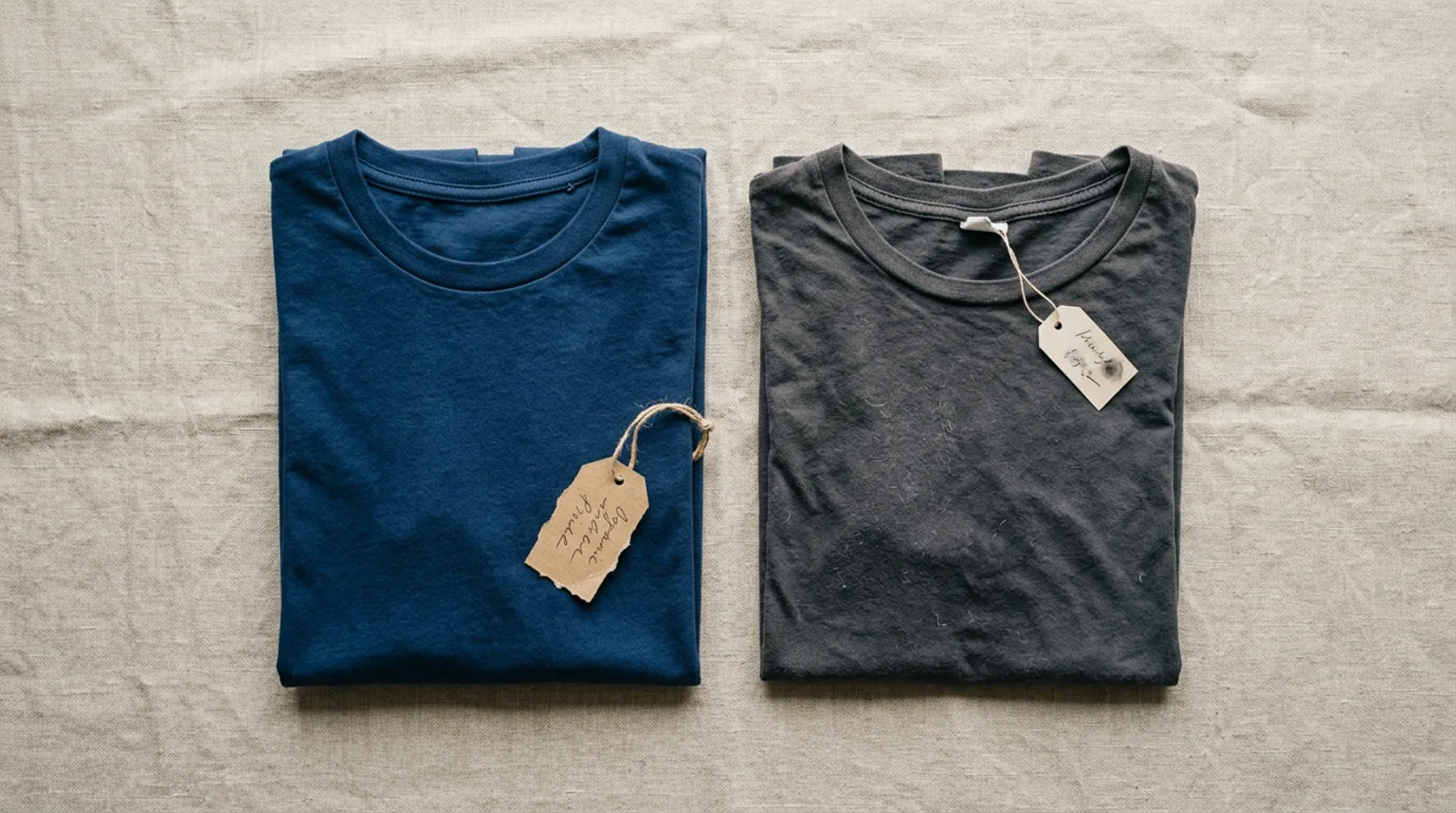
Certified sustainable swag costs more. That's true, and it's worth being specific about how much more — because vague "premium" framing is how budgets die in approval meetings.
At standard MOQs (250–500 units), expect these approximate premiums over conventional equivalents:
| Product category | Conventional cost | Certified sustainable cost | Premium |
|---|---|---|---|
| Organic cotton tee (GOTS) | $8–12 blank | $12–18 blank | 30–50% |
| rPET tote bag (GRS) | $4–7 | $6–9 | 25–35% |
| Stainless bottle | $14–20 | $16–24 (responsible mfg claim) | 10–20% |
| Recycled cardboard notebook (FSC) | $6–10 | $8–12 | 15–25% |
| Fair Trade certified polo | $18–28 | $26–38 | 30–40% |
Two factors can close the gap. First, on-demand and smaller-run programs eliminate the overstock problem — the most expensive swag is swag that gets thrown away. Companies using choice-driven platforms see a 30% reduction in swag waste, which directly offsets the per-unit premium.
Second, the retention value of certified sustainable items is higher: recipients are more likely to keep an item they perceive as ethically made, which improves your cost-per-impression dramatically.
When the premium doesn't matter: high-value client gifting (where the per-unit cost is a rounding error vs. deal size), executive kits (where quality signaling is the point), and programs where sustainability is a stated company value that needs to be expressed consistently.
When it does matter: large-volume event giveaways where 60%+ of items will be discarded regardless of material — in that case, reduce quantity rather than compromise on certification.
End-of-life and disposal
"Recyclable" describes a material property, not an outcome — most promotional products still end up in landfill unless you design for recovery.

This is the section most sustainable swag guides skip. It's also where most programs fail.
"Recyclable" on a label describes a material property, not what will actually happen to the item.
Recyclability is meaningless if recipients don't know the item is recyclable, don't have access to the appropriate stream, or toss it alongside non-recyclables where it contaminates the batch.
The circular economy framing from the Ellen MacArthur Foundation applies here: the goal is to design products for longevity and recovery from the start, not to optimize for recyclability as an afterthought.
When briefing suppliers, ask them about product durability as explicitly as you ask about material content. A stainless bottle that lasts 10 years has a dramatically smaller environmental footprint than an organic cotton tee that pills after four washes.
“Design out waste and pollution. Keep products and materials in use. Regenerate natural systems.”
FAQ
Straight answers to the questions buyers ask most about certifications, carbon claims, and whether eco swag is actually better.
Is "eco-friendly" swag actually better for the environment, or is it still a net negative?
The honest answer: it depends on use. A certified organic cotton hoodie that gets worn for five years is genuinely better than a conventional one. The same hoodie, ordered in bulk and thrown away unopened, is worse — because it consumed resources (even clean ones) without providing value.
The environmental math always includes use rate. Sustainable sourcing matters most when paired with a program design that drives actual use: redeem links that let recipients choose, quality that earns keep rates, and quantities calibrated to demand rather than MOQ minimums.
Do I need GOTS and Fair Trade, or is one enough?
They cover different things. GOTS addresses fiber content and processing chemistry. Fair Trade addresses labor conditions and wages. A GOTS-certified factory can still underpay workers; a Fair Trade-certified factory can use conventional cotton.
For a complete claim on an apparel item, you ideally want both — or a supplier who holds both. At a minimum, for items made in high-risk labor markets (Bangladesh, Cambodia, certain regions of India), a social compliance audit (BSCI, WRAP, or SA8000) alongside a GOTS certificate is the baseline.
What's the difference between GRS and OEKO-TEX Recycled?
GRS (Global Recycled Standard) certifies that the recycled content percentage is accurate and traces the chain of custody from waste collection through finished product. It's a content claim, not a safety claim.
OEKO-TEX Standard 100 tests for harmful substances in the finished product — it can be applied to recycled materials but doesn't verify the recycled content %. For a recycled polyester bag, you'd want GRS to verify the "made from X% recycled bottles" claim and OEKO-TEX 100 to confirm no harmful chemicals made it into the finished fabric.
Can I call our swag program "carbon neutral"?
Not without a methodology behind it. The FTC Green Guides (16 CFR Part 260) and the EU Green Claims Directive both require that carbon neutrality claims be substantiated by a Life Cycle Assessment and verified offsets from a recognized standard (Gold Standard, Verified Carbon Standard).
A claim without that documentation exposes your company to legal and reputational risk. If a supplier tells you their products are "carbon neutral" without offering LCA documentation, treat it as a red flag from the list above.
Where does ActivateSwag source certified sustainable products?
Our sourcing team vets suppliers against the certifications in this guide — requiring certificate numbers, not just self-declarations. We maintain a curated catalog of GOTS-certified apparel, GRS-verified bags and drinkware, and FSC-certified paper goods.
Our client gifting team can build a fully certified program brief, including certification documentation you can share with your procurement or ESG team. If you want to see what this looks like in practice, book a 20-minute walkthrough — we'll share the packaging documentation and cert numbers for your shortlist.
Jenna runs our client gifting advisory and heads sustainable sourcing. Before ActivateSwag, she led procurement for a B Corp-certified apparel label.
A short, useful email every other Thursday.
Operational playbooks for swag and gifting — read in two minutes. No spam, no filler.